Emporium
Quo VadisEmporium is Rome’s port and provisioning district at the foot of the Aventine. In the novel it serves both ordinary movement and labor and, after the Great Fire, a vital gateway for food supplies: the same district associated with mills and warehouses becomes a site where the urgent need for bread exposes the fragility of public order and the political force of relief.
Setting and Access
Quartus places Demas’s mill near Emporium, where enslaved people and hired workers labor in shifts. One hired Christian is renowned for strength, and the night workers are gathered at supper when Chilo is invited to meet them. The district is close enough to the Circus Maximus for the journey to be shortened by following the river through the Porticus Aemilia rather than going around the Aventine.
Emporium also functions as a point of contact between the city and the Tiber’s routes. When Chilo later tells Vinicius that Ursus works for Demas near Emporium, he gives him a lead for tracking Lygia’s protectors without directly demanding their hiding place. The district’s everyday workforce and location thus connect the pursuit of Lygia to the larger network of Christian laborers in Rome.
The Fire and the Breakdown of Supply
The Great Fire turns Emporium’s commercial role into a matter of immediate survival. As fire destroys Rome’s immense food stores, people displaced beyond the walls face hunger, and relief orders come only after Tigellinus arrives from Antium. The delay leaves a dangerous gap between the loss of the city’s supplies and the arrival of replacement provisions.
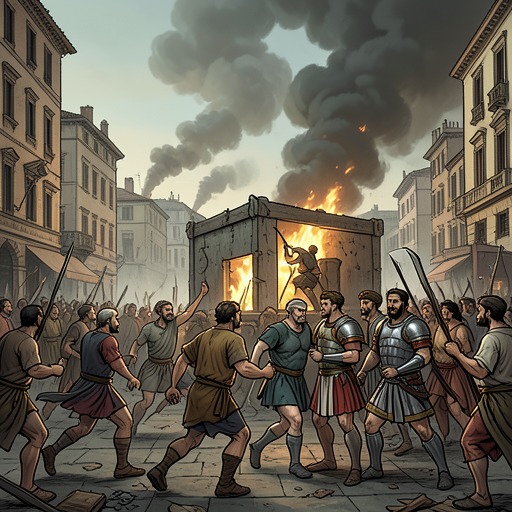
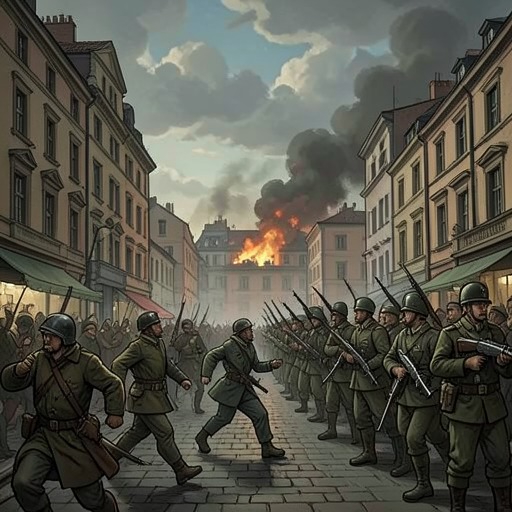
When the first delivery of bread reaches Emporium at night, a crowd breaks through the principal gate on the Aventine side and seizes the supplies. The rush turns the landing and granary into a flashpoint: people struggle over loaves, some are trampled, and flour spills from torn bags across the space between the storehouse and the arches of Drusus and Germanicus. Soldiers eventually take control of the building and disperse the crowd with arrows and missiles. The episode makes clear that food distribution is not simply a logistical task; without secure access and orderly delivery, relief itself can become a source of conflict.
Relief and Political Authority
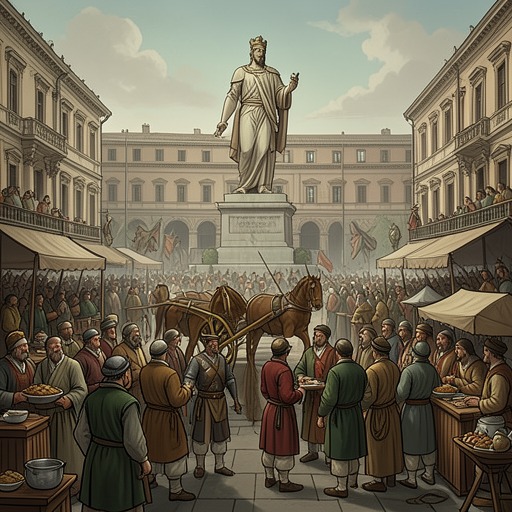
Emporium’s stores and river access help make the later recovery effort possible. Supplies are brought from Ostia, and Rome is provisioned with wheat, wine, olives, and other food. Wheat is sold at a very low price and given free to those in need; a stream of ships, boats, and barges on the Tiber reflects the scale of the incoming supply. The danger of famine recedes, although robbery, murder, and insecurity continue in the makeshift camps around the city.
Food also becomes part of Nero’s public response to the disaster. Petronius promises the crowd that wheat, wine, and olives will be distributed, alongside the reopening of gardens and the staging of games. The audience takes up the familiar demand for bread and circuses, turning a promise of material assistance and entertainment into a public display of allegiance. Read alongside the struggle at Emporium’s gate, the promise reveals the tension between relief as a necessary response to hunger and provisioning as a means of managing the population and restoring imperial authority.
Narrative Significance
Emporium links Rome’s urban geography to its social and political crisis. Its mills represent routine labor; its riverfront and granaries become indispensable when fire destroys stored provisions; and its gate becomes the place where shortages, crowd action, and state force meet. The district’s changing role traces the disaster’s movement from physical destruction to hunger and disorder, then to organized supply and political reassurance. Through Emporium, the novel makes the material foundations of Roman public order visible: authority can announce relief, but it must still move food through the city and get it into people’s hands.